Teaching Resilience Starts With Story
Why storytelling matters—according to research
Research Foundation – Why Stories Work
Decades of research in developmental psychology, education, and mental health point to a consistent insight: children learn resilience not through lectures, but through meaning-making. Stories—especially parables and symbolic narratives—create a safe space for children to explore adversity, emotion, and choice without being told what to think or feel.
A 2024 systematic review published in the Journal of Psychiatric and Mental Health Nursing examined storytelling interventions used with children and found evidence that storytelling can strengthen protective factors associated with resilience, including coping and emotional processing. Stories allow children to engage with difficult themes indirectly, reducing defensiveness while supporting reflection and growth.
Psychological research on narrative transportation—the experience of becoming absorbed in a story—helps explain why this works. Studies published in the Journal of Personality and Social Psychology show that immersion in a story engages attention, emotion, and imagination in ways that influence understanding and belief formation. Stories “stick” because they are felt, not instructed.
Why Conversation Matters
Research also shows that stories are most effective when paired with conversation. Studies published in Cognition demonstrate that children better extract and apply a story’s deeper meaning when they are invited to explain what they think the story is about. Guided reflection—rather than direct instruction—helps children generalize lessons beyond the page.
This aligns with foundational work by developmental psychologist Ann Masten, who describes resilience as “ordinary magic”—the result of everyday protective systems such as supportive relationships, emotional language, and opportunities for reflection. Story-based conversations are one of the simplest ways families can activate those systems.
What This Means for Parents
Research does not suggest that a single book builds resilience on its own. Instead, shared stories create the conditions where resilience can develop.
- Symbolic stories let children explore adversity at a safe emotional distance
- Open-ended narratives encourage perspective-taking and emotional awareness
- Conversation helps children form meaning in their own words
- Parents can support—not prescribe—the lesson a child takes away
This approach respects children as active meaning-makers.
Where The Knotted Tree Fits
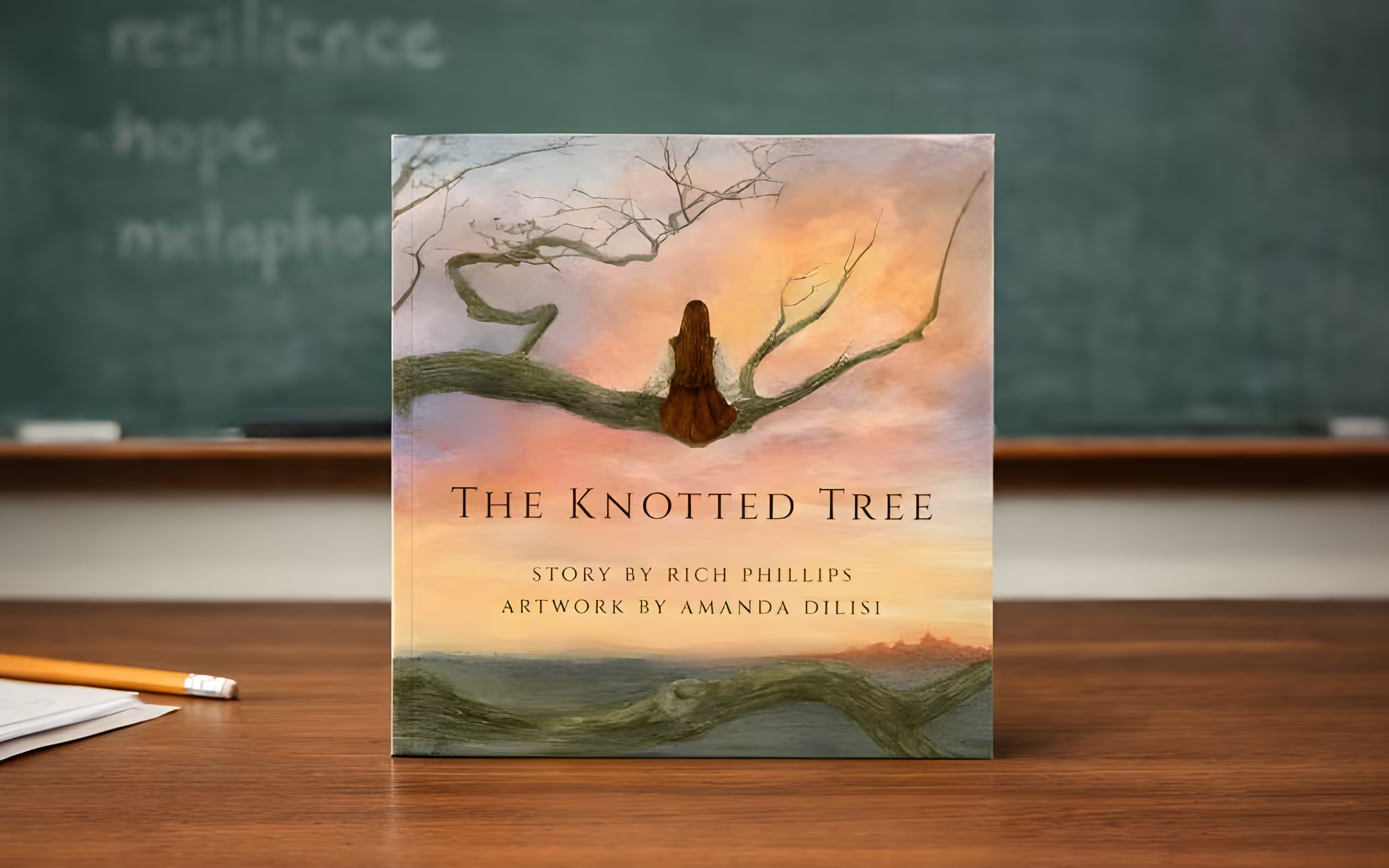
The Knotted Tree was written as a modern parable—not a lesson plan and not a prescriptive self-help story.
Through metaphor and symbolism, the story invites reflection on struggle, choice, and growth. There is no single correct interpretation. The book is designed as a discussion tool that supports conversations about resilience, coping, and meaning-making at a child’s own developmental level.
- Parents reading with middle school or early high school–aged children
- Counseling or therapeutic settings as a conversation starter
- Classrooms or small groups focused on social-emotional learning
- Reflective reading rather than instruction
This design aligns with research showing stories paired with dialogue best support emotional development.
Reflection
Children will face adversity. The question is not whether they will struggle—but whether they will have the language and perspective to make sense of it.
Storytelling doesn’t replace parenting. It supports it.
The Knotted Tree offers a simple, research-aligned way to begin those conversations.